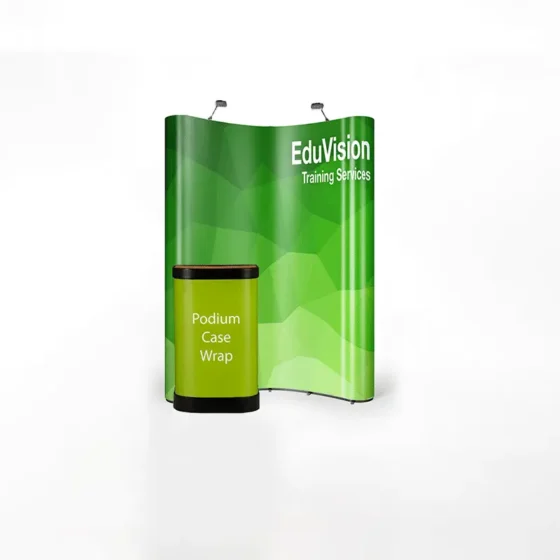
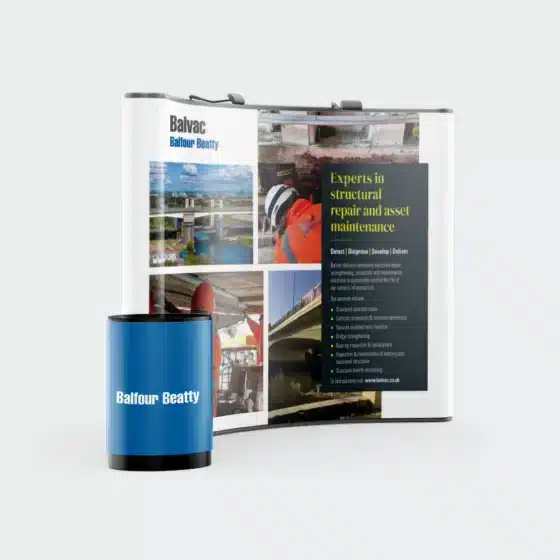
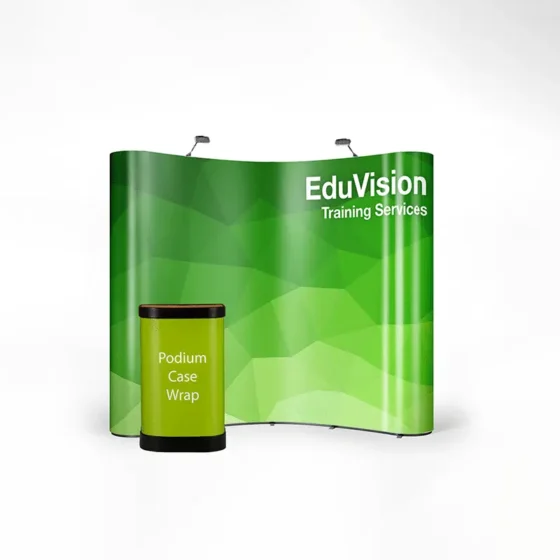
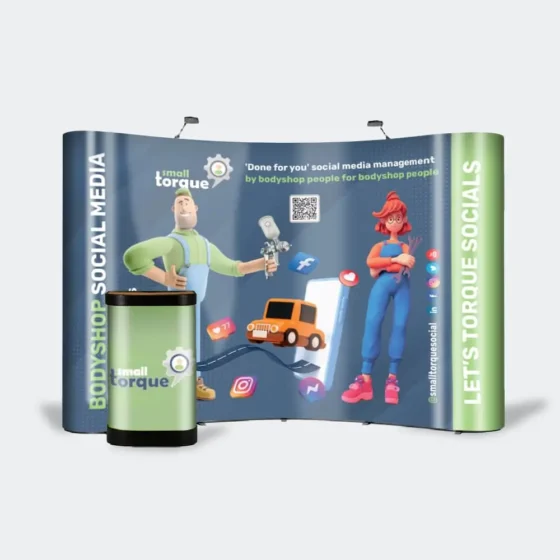
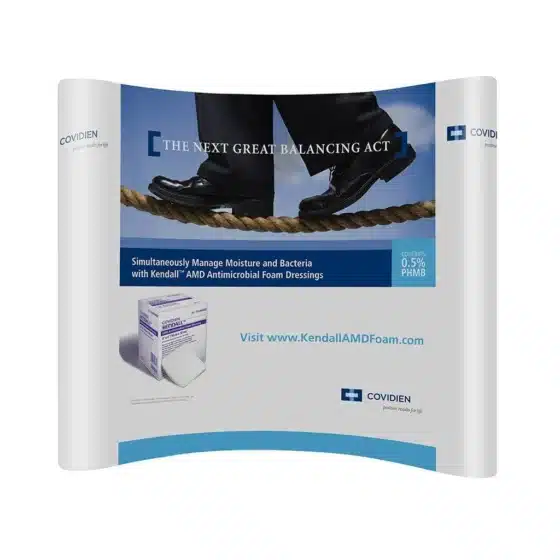
Curved exhibition stands offer a practical way to create visual impact without complex build requirements. Their flowing shape draws attention from multiple angles, making them well suited to trade shows, exhibitions, and marketing events where space and setup time matter. Designed for repeat use, these systems combine strong structures with high-quality exhibition display graphics, giving you a professional presence that’s easy to transport, install, and store between events.
Showing all 5 results
Curved exhibition stands are a proven way to create a strong visual presence while keeping logistics straightforward. Their continuous shape naturally guides attention across your messaging, helping brands stand out in busy exhibition halls without the cost or complexity of a bespoke build. Designed for repeat use, these systems balance professional appearance with practical handling for teams attending multiple events each year.
At trade shows and marketing events, visibility matters just as much as reliability. Curved systems work particularly well in shell scheme spaces and open floor areas, offering a defined backdrop that frames your brand without blocking sightlines. Many businesses choose them as an alternative to traditional flat walls because the shape feels more engaging from different angles, especially in high-footfall environments.
For exhibitors moving between venues, portability is a major advantage. Lightweight exhibition displays are easier to transport, quicker to install, and less demanding on staff during setup and breakdown. That makes them a practical choice for teams who want consistent branding without relying on external installers.
Modular exhibition stands give you flexibility as your requirements change. Curved sections can be combined, reconfigured, or expanded to suit different stand sizes, allowing the same investment to work across multiple events. This approach is popular with organisations attending both regional exhibitions and larger national trade shows, where stand footprints can vary significantly.
Because the structure is reusable, your focus can stay on refreshing exhibition display graphics rather than replacing the entire stand. Updated panels or prints keep your messaging current while the core system remains in service.
The quality of your stand depends heavily on the quality of the print. At Eazy Print, exhibition stand printing is handled alongside our wider large-format production, using equipment chosen for consistency and colour accuracy. With litho, digital, and large-format capabilities all under one roof in Hampshire, we maintain control from file checking through to final output.
Our team has over 30 years’ experience producing display graphics, signage, and promotional materials for UK businesses. Files are checked as standard, because getting it right first time is part of the service, not an added cost. This attention to detail is especially important for large visual surfaces, where small errors are far more noticeable.
Reusable exhibition displays are a sensible choice for businesses focused on long-term value. Curved systems are built to withstand frequent assembly, transport, and storage, making them suitable for regular exhibitors. Carry cases and compact packing options help protect graphics between events and simplify logistics, whether you’re shipping to a venue or transporting everything in-house.
Quick setup is another practical benefit. Many pop up display stands can be assembled by one or two people without tools, reducing reliance on venue contractors and keeping your schedule flexible on show days.
When planning an exhibition, budgets and deadlines are often tight. Clear pricing removes uncertainty and makes it easier to commit with confidence. At Eazy Print, prices are shown upfront with no hidden charges. Delivery is included, express fees aren’t added later, and file checks are part of the service.
Because production is managed internally, turnaround times are reliable and communication stays straightforward. This is particularly valuable when exhibition dates are fixed and delays aren’t an option.
Choosing exhibition stand makers with broad print expertise means you’re supported beyond the stand itself. Many customers order complementary items such as banners, display boards, brochures, and point-of-sale materials to create a consistent presence across their space. Having these produced together helps maintain colour consistency and reduces coordination issues.
Our designers and printers work closely to ensure your exhibition booth design translates accurately into large-format print, maintaining clarity, alignment, and finish across every panel.
Curved exhibition stands suit businesses that want a professional look without unnecessary complexity. They work well for product launches, lead-generation events, and brand awareness campaigns, offering a balance of impact, portability, and reuse. With reliable production, experienced support, and UK-wide delivery, they remain a dependable option for exhibitors who value both appearance and practicality
Curved stands add depth and visual flow to exhibition booths. This FAQ explains when curved beats straight, how to design for a curved surface, and how to make the most of them at events.