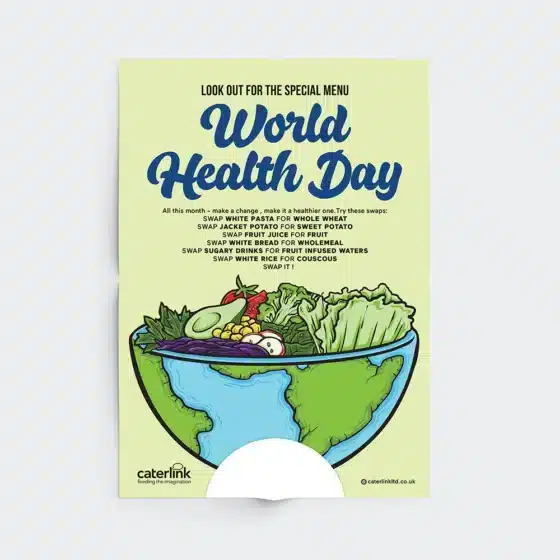
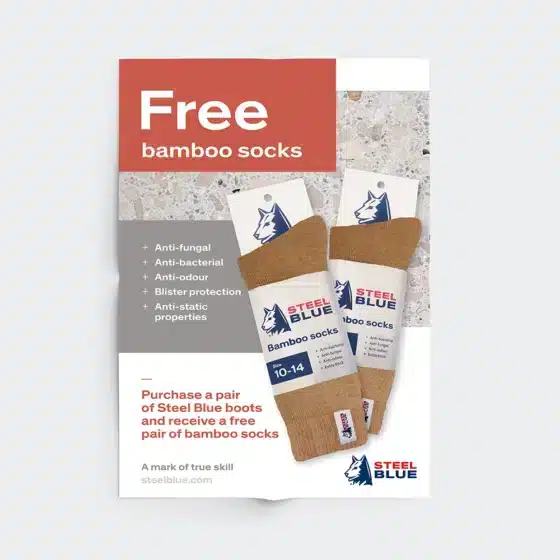
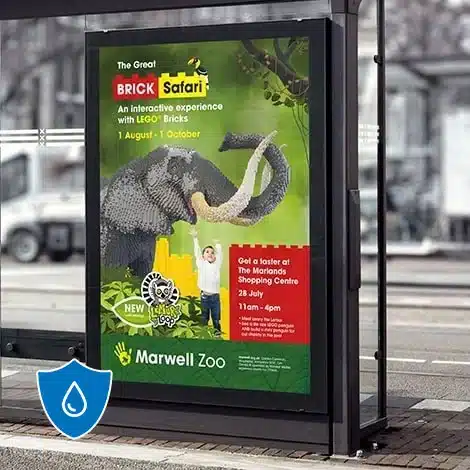
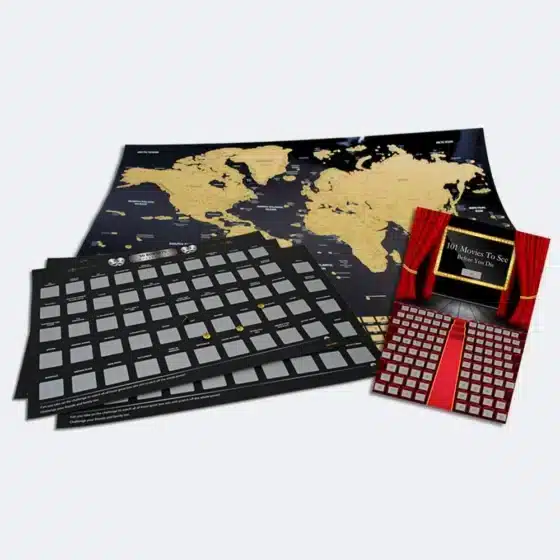
Custom Poster Printing gives you professional, high-impact visuals for marketing, retail, exhibitions, and internal displays. Our large format poster printing delivers sharp detail, accurate colour, and a choice of matte or gloss finishes to suit your application. Ideal for short runs or repeat orders, our poster printing services are built for businesses that need reliable quality, consistent results, and fast UK delivery—without compromising on print standards.
Showing all 11 results
Custom Poster Printing is one of the most effective ways to communicate a message quickly, clearly, and at scale. Whether you’re promoting an event, supporting a retail campaign, presenting information internally, or creating visual impact at an exhibition, professionally printed posters give your content the space and clarity it needs to perform.
At Eazy Print, we produce posters for businesses that care about finish, colour accuracy, and consistency across every print run. With over 30 years’ experience as Southampton printers serving customers across the UK, we combine proven production processes with modern large-format equipment to deliver reliable results—on time and without hidden costs.
When you need posters that stand out from a distance, large format printing makes the difference. Our production setup is designed to handle everything from short-run requirements to higher-volume campaigns, delivering crisp detail and strong colour reproduction across a wide range of applications.
Large format prints are commonly used for:
By keeping large-format production in-house, we maintain full control over quality and turnaround, ensuring your artwork is reproduced exactly as intended.
Posters often rely on imagery to do the heavy lifting. That’s why our process is geared towards producing full colour poster prints with smooth gradients, sharp text, and consistent tones throughout the sheet.
For image-led designs, photo quality poster printing ensures fine detail and accurate colour balance, making it suitable for branded campaigns, lifestyle photography, and high-resolution graphics. Our experienced print team checks files before production to reduce the risk of unexpected results and to ensure your artwork is right first time.
Choosing the right finish can significantly affect how a poster performs in its environment. We offer both matte and gloss poster prints, each suited to different uses:
If you’re unsure which option best suits your display, our team can advise based on viewing conditions and intended use.
Not every project requires bulk quantities. Our short run poster printing options are ideal for businesses testing campaigns, running limited promotions, or producing location-specific messaging.
We regularly produce posters for:
This flexibility allows you to order what you need, when you need it, without committing to unnecessary volume.
As a full-service printer operating under one roof in Hampshire, we manage every stage of production—from file checking to final dispatch. Our poster printing services are supported by digital, litho, and large-format capabilities, allowing us to integrate posters seamlessly into wider print campaigns if required.
Clear pricing is central to how we work. All prices are shown upfront, with no hidden charges, no express delivery fees, and no extra cost for file checking. What you see is what you pay.
We deliver printed posters across the UK, offering fast turnaround without compromising on quality. Because we control the entire process in-house, we can maintain consistent lead times and dependable delivery schedules—something our business customers rely on when deadlines matter.
With decades of experience and a skilled production team, Eazy Print is set up to handle everything from one-off posters to repeat commercial work. Our investment in quality equipment, combined with efficient workflows, means you receive dependable print results at competitive prices.
If you’re looking for high quality poster prints backed by real production experience, transparent pricing, and UK-wide delivery, you’re in the right place.
Custom posters are still one of the most cost-effective ways to advertise events, products, and promotions. This FAQ covers sizes, paper choices, and how to design for posters that get noticed.